
the story
dr. Snow “the Story” – how a legend was born
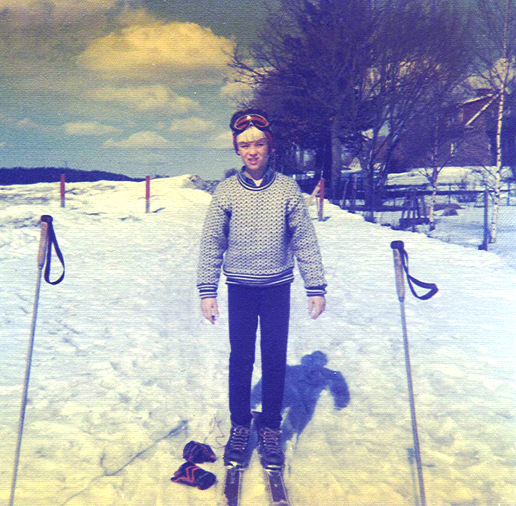
In the beginning he had leather boots and wooden skis with screwed-on edges, ski poles with big baskets and a Norwegian sweater. Today he has wide freeride skis, special freeride ski boots, a helmet, avalanche transceiver, probe, shovel, technical ski clothing, carbon poles and an ABS backpack. I would like to tell you the story in between right here. He was born in Gothenburg, Sweden, on a beautiful, warm summer day in July. We don’t know very much about his first years. In the winter after his 4th birthday he started skiing.
The early days
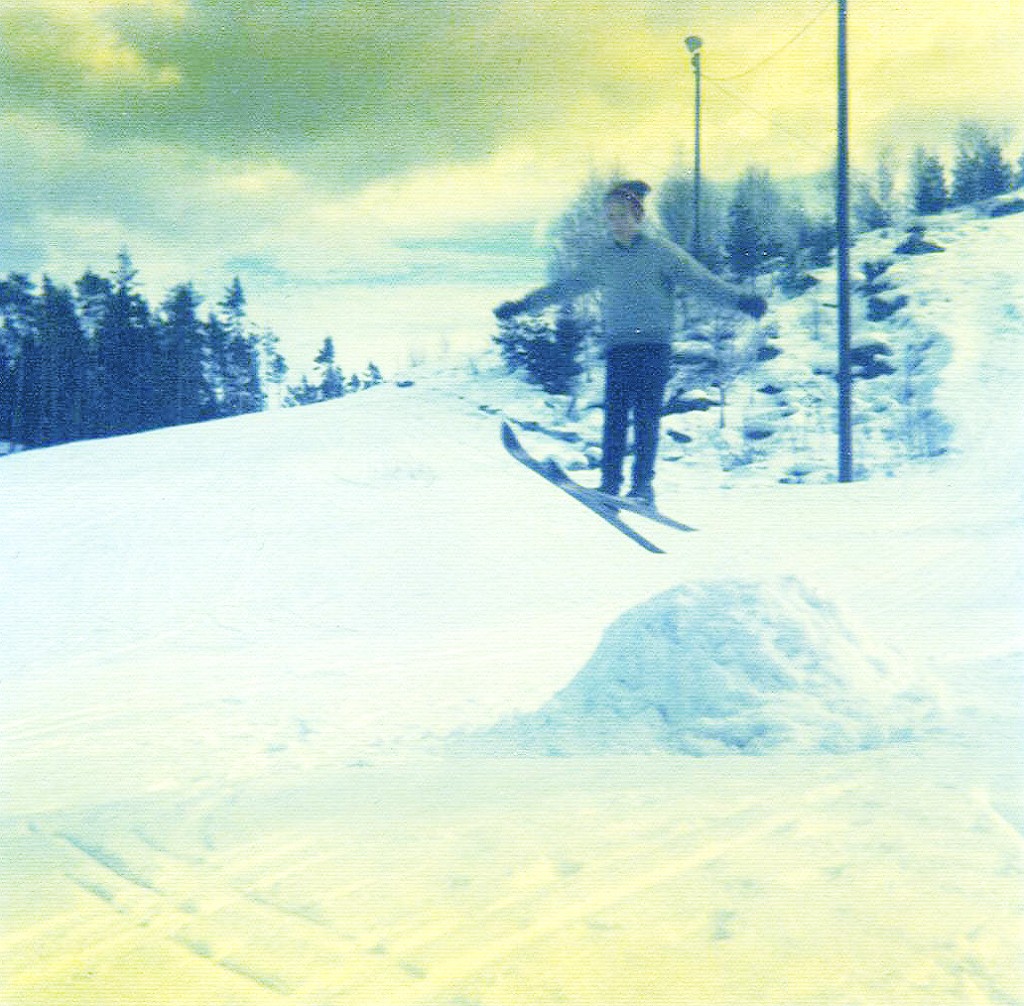
Right next to his home there was a small hill, which he walked up again and again in leather boots and wooden skis and skied down. His grandfather always asked him how well he was skiing by now, and the answer was always “like crap” – and his grandfather always laughed. He had also heard about “Nivea cream” (which his mother always rubbed on his face) and wanted to eat it after skiing, because he thought it was some kind of “pudding”. School started, and with it other sports besides skiing, including gymnastics and ice hockey. We won’t say too much about these sports here, but he was very successful at them too. Back to skiing. In the surrounding area there were also a few bigger hills where he spent a lot of time. There were no lifts – “walking” was the magic word. The skis back then were wooden skis with screwed-on edges and a cable binding that could also be fixed for “alpine” skiing. Apart from that, pretty much everything was possible on those skis, from cross-country and alpine skiing to ski jumping. Nearby there was a small ski jump, which – to his mother’s despair – he jumped off quite often.
Learn more about "the early days"
His parents had a holiday house 25 kilometres from his birthplace. This is where they spent weekends and, of course, the holidays. Not far from the holiday house there was also a larger ski area, “Bollenkollen”, with 3 lifts and about 300 metres of vertical. As a child it was as impressive as if it were the “Alps”: wide views, long runs, jumping – everything was possible here. A paradise for a boy. It must be said that as a child he was also always out on his bike, in and around Gothenburg, always looking for the highest point and the best view. He later told me that this goes back to a trip he made as a small child on his father’s back (up Kebnekaise, Sweden’s highest mountain).
Even as a child and as a teenager he was very close to nature: he always played outside, built huts in the woods with his “gang”, went fishing and spent a lot of his summer holidays with his parents in the Norwegian mountains. This is probably where his interest in indigenous peoples (Native Americans, Inuit etc.) and their view of the world came from. Shaped by a sporty childhood and a normal school career, he went on to vocational school. A very tired boy dragged himself through vocational school, often falling asleep in class. But despite – or perhaps because of – all that sleep, he finished this time at school with top marks. After vocational school he continued his training in companies to obtain his master craftsman’s certificate (plumber for water and heating). And what about skiing? Shortly before his 18th birthday he went to “Geilo” (Norway) with a few friends during the Easter holidays. There, something happened that would change his life:
The decisive years
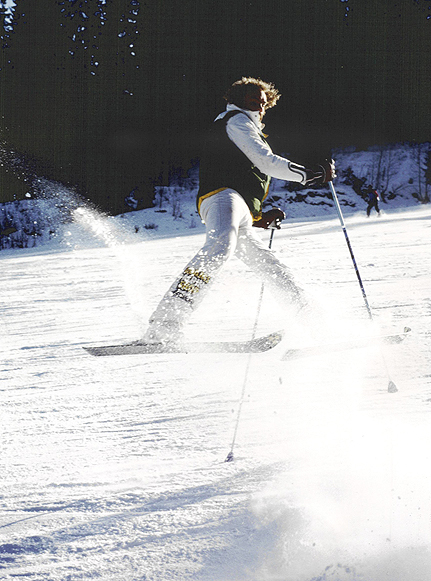
The sport of “freestyle” skiing had come to Europe from the USA. In “Geilo” there was a team offering a “freestyle show”: somersaults over a big jump, ski ballet etc. – a ski show that thrilled him immediately. Quietly he thought to himself: “I’m going to do that too!” After years of gymnastics in his youth, the step to “gymnastics on skis” wasn’t far. Back from the Easter holidays in Norway, he went straight to Gothenburg and got his equipment: Roy freestyle skis with a Salomon binding and Hanson ski boots (from Adams Sport, a sports shop that was always different and more unusual than the others). Adams Sport later became his first sponsor. In a bookshop he then got an American book about freestyle that described everything there was to know about it – the tricks and jumps and how to do them. With this new knowledge and the new equipment he went out on the slopes to make his first attempts as a “freestyler”. Completely fascinated by this new sport on skis, he then went off to do his military service in Sollefteå in northern Sweden. Military service wasn’t exactly a “highlight”, but there was a slope nearby that was also open in the evenings. After “duty” he often went out on the slope with the book to practise “tricks”. One day his military service was over, and together with a few friends he set off for Zell am See/Kaprun to celebrate his “freedom” from military service.
Learn more about "the decisive years"
Looking back, this is probably where everything was decided: the big mountains and the opportunities this region offers are something special. Glaciers, a lake and mountains all around for climbing, hiking etc. The week in Zell am See/Kaprun went by very quickly and soon everyone was back in Sweden. With the experiences and impressions of his first time in the Alps, things moved relatively fast. The very next summer he signed up for a camp in Tignes, France: the “Salomon Freestyle Camp”. One week was planned, but it turned into a whole month. Freestyle fever had taken hold of him.
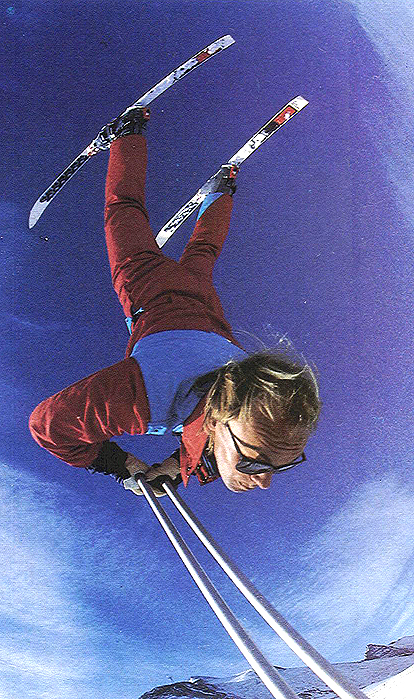
One of the instructors was Stefan Engström, who developed ballet skiing further. Later both were to ski in the same team for Sweden – and later still, Stefan Engström founded the now world-famous ski clothing company Peak Performance. Back in Sweden he returned to his job at NVS as a plumber; after all, he wanted to finish his master craftsman’s certificate. He kept training hard, and the following winter the first competitions began. Off to Stockholm in a fully packed Volvo Amazon for the first competition. Stockholm has “ski areas” right in the middle of the city; this competition took place on the “Högdalstippen”. He was very nervous. He didn’t know anyone and actually had no idea what was about to happen. (Ballet skiing is comparable to figure skating: the competitor skis a free programme to music of their own choice, in which various tricks, somersaults and jumps are scored by a jury. The slope is rather flat and about 250 to 300 metres long. The skis are shorter, while the poles are longer than normal to gain height for the jumps and somersaults.)
 He competed in three disciplines (ski ballet, aerials and moguls), with ski ballet being his favourite. His first competition as a newcomer in Stockholm ended in 7th place. He was happy and absolutely wanted to carry on. His next competition was in Uppsala, where he took first place. Now there was no going back! Freestyle was his life! At work he managed to arrange things so that he worked a lot in summer, when everyone else was on holiday, in order to have plenty of free time in winter. During his training he had also learned welding, so at the company where he worked he was able to build his own ramp (about 6 metres long and weighing 200 kg) for a water jump on which he could practise somersaults. But how do you get a ramp like that home?
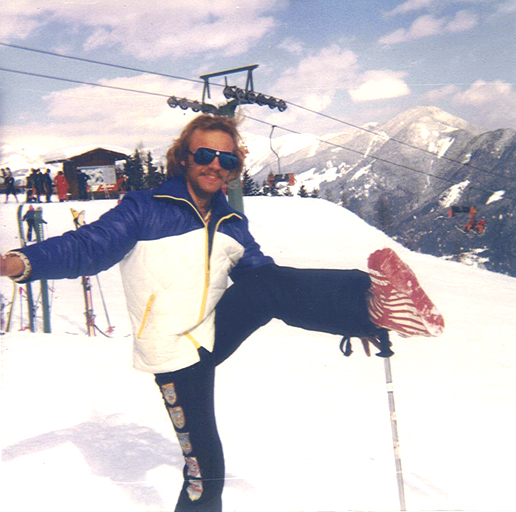
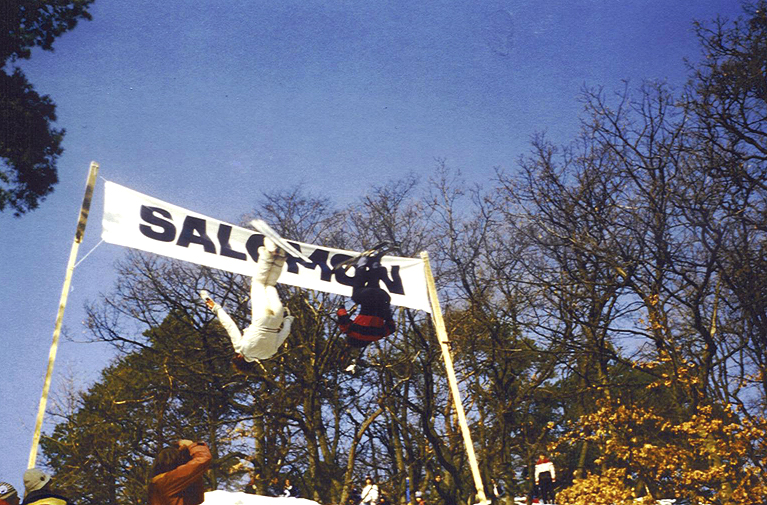
On the roof of the Volvo, of course! The car had to put up with a lot – luckily they didn’t run into the police. The ramp was more or less fastened to the roof of the Volvo, hanging down at the front and back – it was a kamikaze drive, but it ended well. The following winter the competitions continued, and he achieved further successes. Among other things he did his first “1080” on the jump, as well as a double front flip (a very difficult jump because you cannot see the landing before you touch down). In autumn he went back to Kaprun and the Kitzsteinhorn for a month, training with friends to take part in the European Cup the following winter. Everything went well, with mixed results. That year a big freestyle event was also planned in Gothenburg. Together with his friends and sponsors he organised an event in the middle of Gothenburg like nothing before. They brought snow from nearby ice rinks by helicopter to build a big jump. They had no idea whether anyone would come at all, but it turned out to be a huge success, with around 10,000 people.

Ausbildung, Studium & Co.
By now he had his master craftsman’s certificate and moved to another company. The boss of the new firm was also a big sports fanatic, which of course was a great advantage. Here too, as before, he could have time off in winter and work in summer instead. This went on until the day he was nominated for the first Swedish national freestyle team. How should things go on now?! Luckily his boss helped him. He went to his boss and asked him for advice on what he should do: “What would you do in my place?” The answer was: “Quit and concentrate on skiing. You can’t let this chance pass you by!” And so he handed in his notice on the spot.
Learn more about "Training, studies & co."
The first Swedish national freestyle team had been founded, and he was part of it. What to do now? Train even more, of course. He went back to Kaprun and the Kitzsteinhorn, where he stayed all summer to train. In autumn he went to Tignes, France, with the national team for pre-season training. This was the start of a new chapter in his life. A few short facts about his time with the national team: for several summers he worked in Zell am See as a tour guide for Swedish travel agencies, of course so that he could train more. For some years he had about 300 training days on snow per year and was known among his friends as a “training addict”.
He also worked as a waiter, cook, freestyle coach, instructor, sports teacher and precision mechanic. In his free time he converted cars, improved equipment, modified ski bindings and designed ballet poles. He also achieved success during his time in the national team: among other things he was Swedish champion several times, won awards at Scandinavian championships and was among the 10 best freestylers in the world. But as we all know, everything comes to an end – and so did his “freestyle life”. He stopped freestyle skiing to go back to school.
In Stockholm he studied sport at the “Bosön sports university”. His first contact at the school was a conversation with a teacher about why he wanted to study there and what sport he had done so far. When the teacher heard that he had done freestyle, he asked: “I was on holiday in Åre once, when some lunatic wanted to set a world record in ballet skiing (skiing for 24 hours non-stop). Do you know him?” Of course, it was him. At the school he got into sport climbing, among other things, and together with a friend built Sweden’s first “indoor climbing wall” with home-made wooden holds. He also worked as a “teacher” during the ski courses at the sports school.
His teacher in sports psychology gave him new ideas about how skiing could be taught. This is where his “Ski Clinic” came from. His time at the sports university was one of the best of his life. He learned a great deal and gained new ideas and plans for the future. So what was next? Back to plumbing? No, certainly not! During his time at the sports school he naturally thought about what he would do when school ended. At the same time, several ski magazines (including Åka Skidor) had published articles about adventure activities (sport climbing, mountaineering, mountain biking, rafting etc.). He wondered: where can you do all of this in one place? He already knew the place: Zell am See, Austria.
During his last year at the sports school he worked out a plan for how this could be done, contacted the travel agencies he had worked for before and told them about his plans. So he bought a Ford Transit van, a rafting boat, a few climbing ropes and various other equipment. He graduated from the sports school with full success, set off for Zell am See and founded the company Adventure Service – back to the place where everything had actually begun. It turned out that things were not as easy as he had imagined. The Swedish travel agencies were happy to be able to offer something new; that was not the problem. The problem was the missing qualifications for all the activities he wanted to offer. He actually had no idea how things worked in Austria and had simply started his activities. After some initial difficulties everything was restarted together with an Austrian partner. At that time skiing was still a big part of his life. But other sports also came to the fore, sport climbing being one of them. He had started it during his studies and now he was training like crazy again.
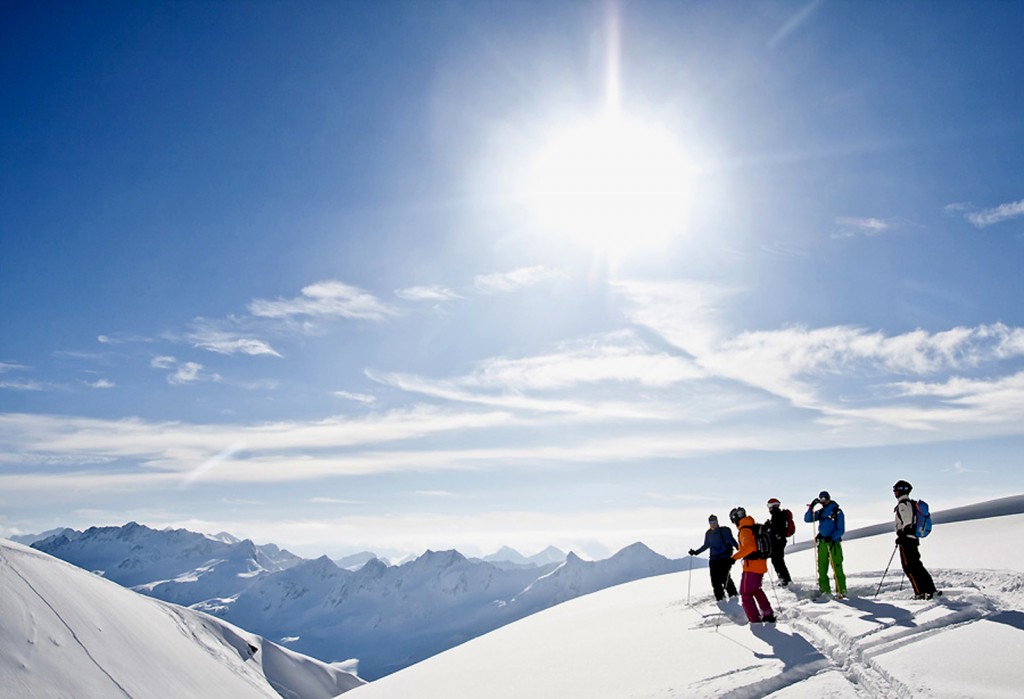
Off to the Alps
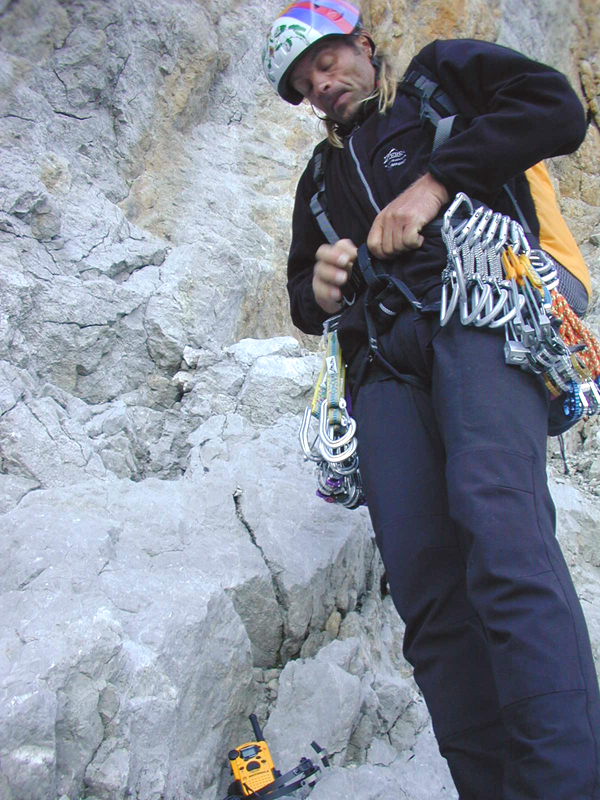
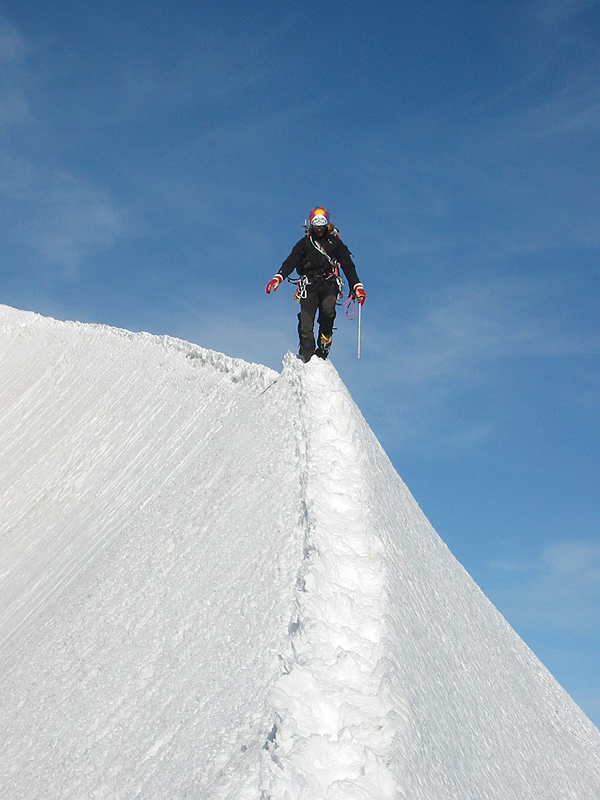
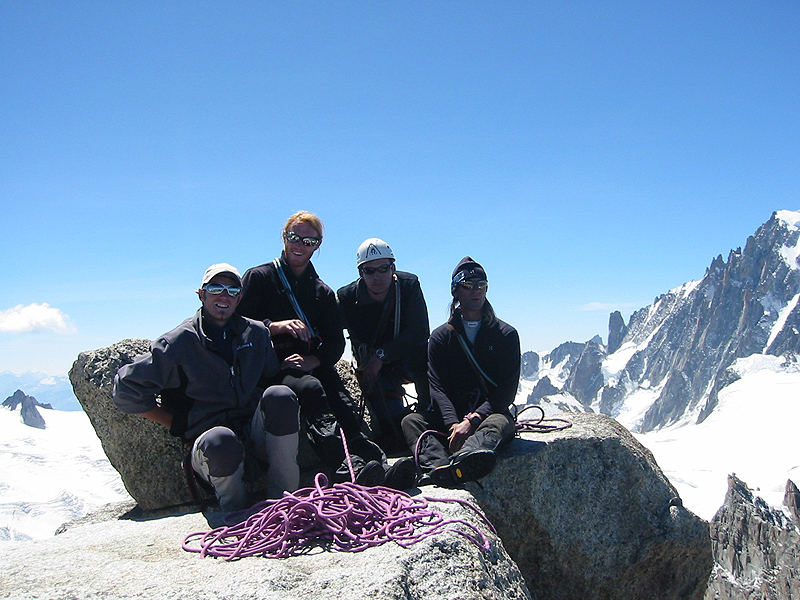
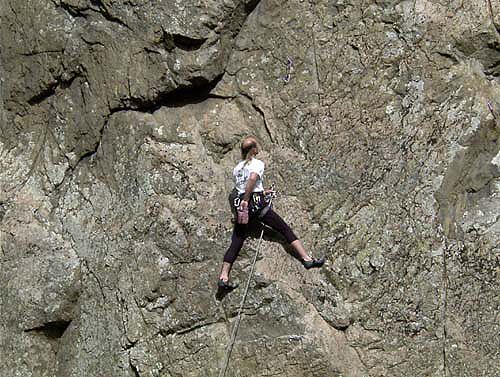
He climbed everything he saw and did strength training almost every day to get better. Wolfgang Güllich was his great role model back then. He had written a book about climbing training, and he followed this training strictly. One day he cracked grade 10 and was very pleased. Another sport that was just starting out in Austria was paragliding. Paragliding became his new project. At first it was more like “crash flying”, but over time he really learned to fly – or rather glide. He took part in a few competitions; among other things he flew as a paraglider pilot at the first “Dolomitenmann”. He also did filming for the Austrian broadcaster ORF. And what about the qualifications? One after another they were completed, starting with rafting guide.
Learn more about "Off to the Alps"
The real reason he emigrated to Austria was the mountains. While working as a tour guide in Zell am See he also got in touch with local mountain guides and did some tours with them. Very soon he wanted to become a mountain guide himself. At that time, however, this was not yet possible, because you had to be an Austrian citizen. One day, while doing his hiking guide training, he remembered his wish. He asked the course leader whether it would now be possible for a Swede to train as a mountain guide in Austria, and the leader confirmed that with Austria joining the EU there should no longer be any obstacles. With this information a new chapter of his life began. He absolutely wanted to become a mountain guide and, together with a friend (who was already a mountain guide), started training for the course and collecting tours.
To be admitted to the entrance exam at all, a total of around 100 tours had to be completed beforehand, in all alpine disciplines – climbing at various grades, ice climbing, high-altitude tours, ski tours etc. Back then the aptitude test took place on the Dachstein over a weekend. After many nerve-racking moments he passed the aptitude test and the training could begin. Of the 140 people who took the entrance exam, 20 made it into the training.
After 2 years of courses, exams, tears, sweat and happy moments, the final exam took place in Chamonix, France. After two weeks of hard work, guiding and final exams, the moment had come. Had he made it?? Yes, indeed – as the first Swede to complete the Austrian mountain guide training, he stood in front of the instructors with tears in his eyes, overjoyed. He had reached his goal through a great deal of diligence, work and discipline. At last he had become a mountain guide! His qualification as a mountain guide (state-certified mountain and ski guide) also opened up new work opportunities for him:
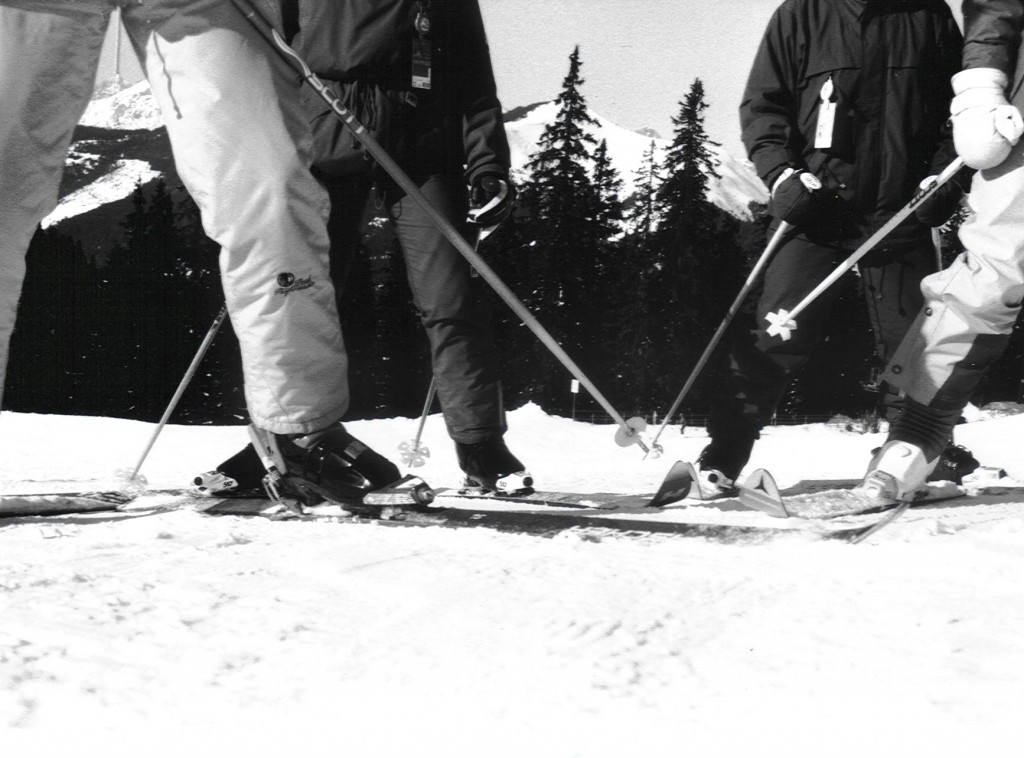
During the winter months he initially worked with the Swedish travel agencies and offered them his own concept, “Ski Clinic”, which he had “invented” and developed during his studies at the sports university: a two-day course to improve ski technique, in a different way from the usual ski schools. Ski Clinic was based on his own experience in the Swedish national team, Feldenkrais, Inner Skiing, Syber Vision and relaxation exercises. It was unusual, interesting and educational. Probably the “craziest” thing to be seen on these courses was the huge mirror set up on the slope: six metres wide and over two metres high, a wall of mirrors you could simply ski towards to see yourself and get direct feedback. He was even invited by the Salzburg training team to present his “Ski Clinic” concept to ski instructors.
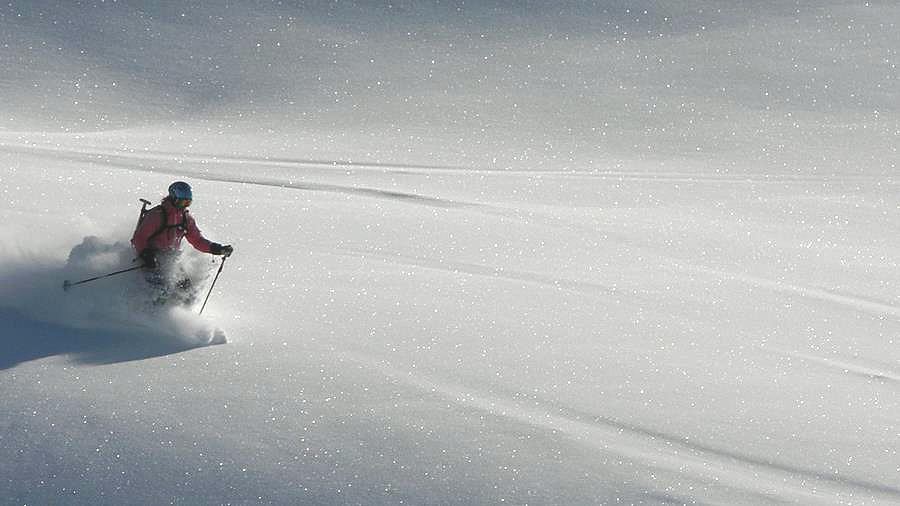
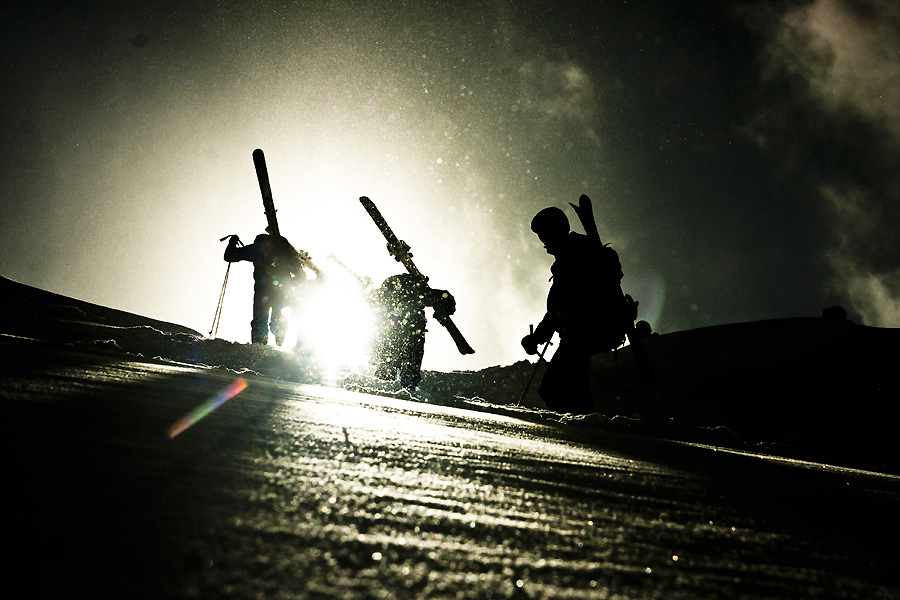
The original form of skiing with dr. snow
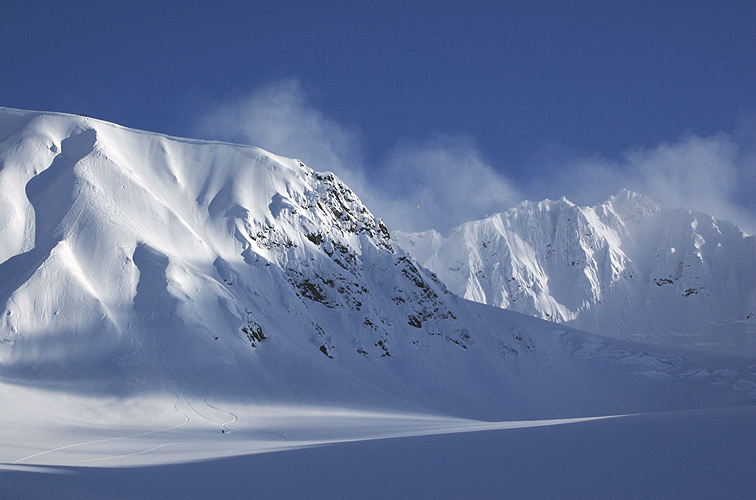
The Swedish travel agencies then disappeared from Zell am See, and for several years he worked in ski schools as a “normal” ski instructor, where he slowly lost his love of skiing. After successfully qualifying as a mountain and ski guide, he started doing what today is called “freeriding”. His love of skiing was back – and how! Simply away from the slopes and out into the terrain, in search of deep snow! As the equipment slowly changed too, it became even more fun. Wide skis came onto the market, special freeride bindings, colourful ski clothing and much more. Freeriding slowly developed into its own scene, just like snowboarding once did.
Learn more about "the original form of skiing – with Dr. Snow"
And this development is far from over – it has only just really begun. For several years now he has been self-employed in the “freeride” scene, as a trainer for the Salzburg ski instructors’ association and, among other things, as a guide with the Freeride Experience Team. Thanks to his work as a skier he has been able to visit many places. Some “highlights” are heli skiing in Canada, cat skiing and freeriding in Canada, and a very special highlight was certainly heli skiing in Haines, Alaska. (His time in the Swedish national team should of course also be mentioned here, when he travelled half the globe with the World Cup circus.)
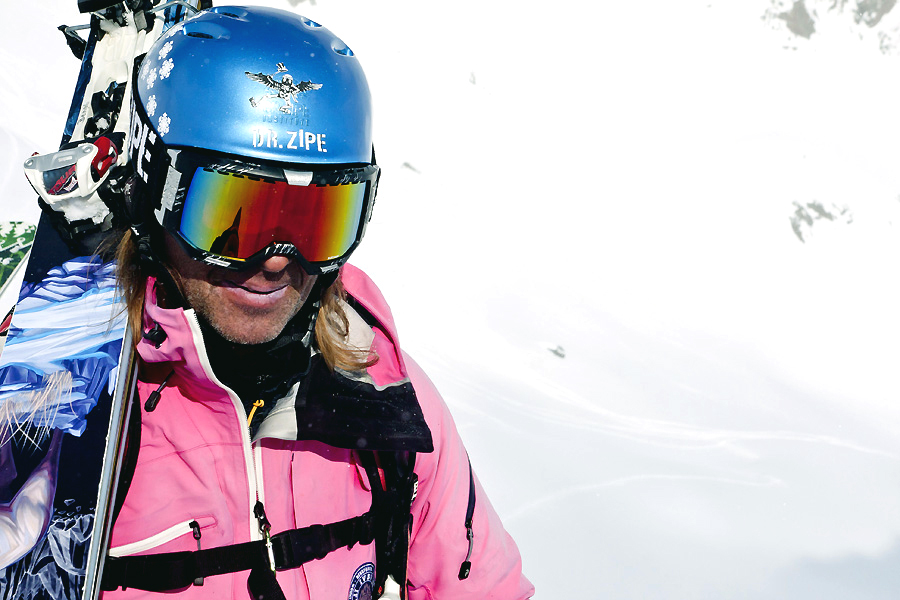
Now the “story” overlaps with the here and now. At this point we would like to briefly describe the “birth” of Dr. Snow: on a freeride trip through Canada’s ski areas with a Swedish friend, they visited, among others, the Whitewater ski area in southern British Columbia. During that time they stayed at the Hume Hotel in Nelson. One evening after dinner they sat in the hotel bar, met local mountain guides and ski instructors and started chatting with them. They talked about this and that (mountains and skiing, of course), and after a while the name “Dr. Snow” popped into his head. After a brainstorming session in the bar with his Swedish friend it was clear: “Dr. Snow” had to be a guide who leads his guests through the winter landscape professionally, in a natural way and with the best possible training. Over time, the name and guide “Dr. Snow” has grown into a product that now covers many areas, but whose heart always lies in skiing. Diligence, patience, work, naturalness, quality, honesty and originality are the key points. Whenever possible, Dr. Snow doesn’t like paper contracts: paper can tear! A firm, honest handshake, watched over by nature and the mountains, means more to him. Contracts like that cannot be broken.
“People who only work have no time to dream.
Only those who dream attain wisdom.”

Partner
 |
 |
 |
 |
 |
 |
Bengt Lundberg | Berg- & Skiführer
Saalhofstraße 3
A-5751 MAISHOFEN
AUSTRIA
Tel.: +43 664 2810254
Mail: info@drsnow.at
Web: www.drsnow.at